The Royal Procession at Royal Ascot: A Tradition That Still Begins in Windsor

The Royal Procession at Royal Ascot
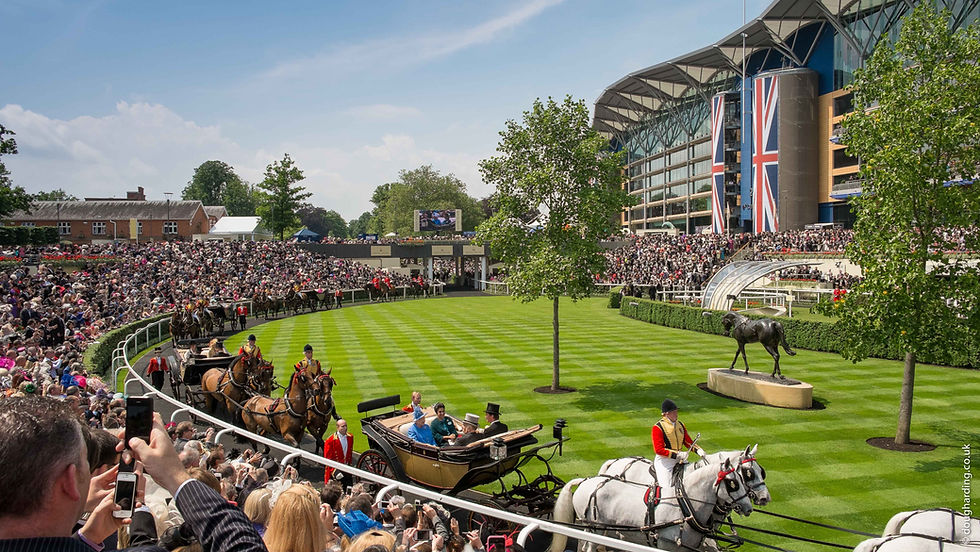
For many visitors, the Royal Procession is one of the defining moments of Royal Ascot. As the State Landaus emerge onto the racecourse, drawn by immaculate Windsor Grey horses, thousands of spectators rise to their feet to welcome the King and members of the Royal Family.
It is a moment of ceremony that has become synonymous with Royal Ascot.
Yet few realise that this tradition begins long before the carriages reach the racecourse, and that its roots lie in Windsor, where the relationship between the Royal Family, horses and carriage travel stretches back more than three centuries.
A Tradition Begun by George IV
Although Ascot Racecourse was founded by Queen Anne in 1711, the Royal Procession as we recognise it today began much later.

On 31 May 1825, King George IV established the first official Royal Procession, transforming the royal arrival into a magnificent public display of ceremony and pageantry.
Accompanied by the Duke of Wellington and members of the Royal Household travelling in four further coaches, the King departed Windsor Castle before making the journey to Ascot. It was an arrival designed not simply for convenience, but to celebrate the close relationship between the Crown and Britain's most prestigious race meeting.
Almost two hundred years later, the Royal Procession remains one of the most anticipated moments of every Royal Ascot.
More Than a Journey
Today it is easy to think of the procession simply as the King's arrival.
In reality, it represents something much greater.
It marks the official opening of the day's racing, celebrates the enduring connection between the Sovereign and Ascot, and continues one of Britain's finest examples of living ceremonial tradition.
For many guests, seeing the Royal Procession is every bit as memorable as the racing itself.
A Tradition That Has Evolved
While the ceremony remains remarkably familiar, the journey itself has naturally evolved with the modern world.
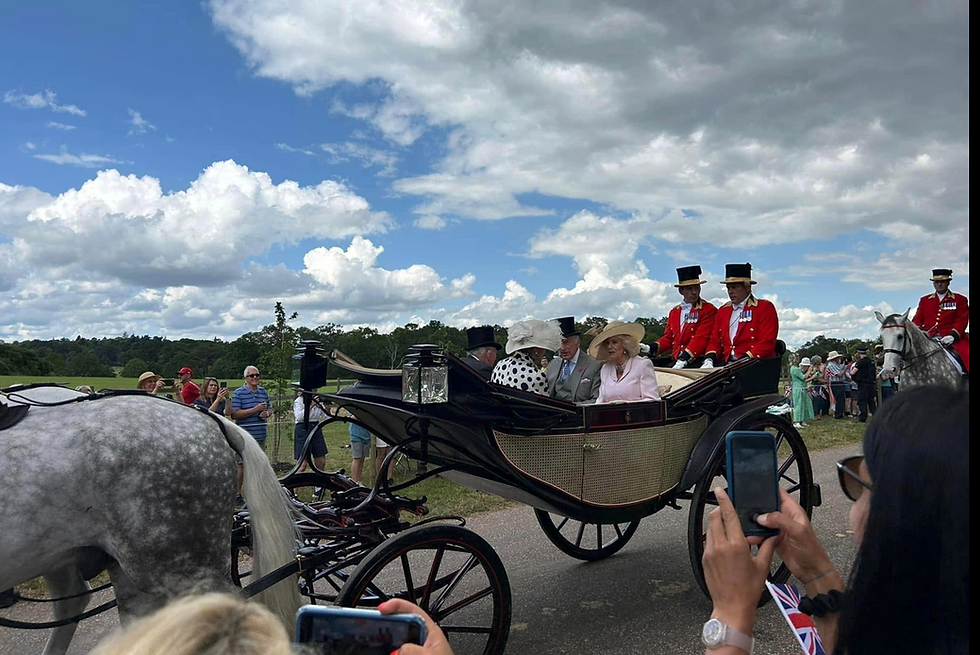
Rather than travelling the entire distance by horse-drawn carriage, the Royal Family now completes the majority of the journey by motor car before transferring to the waiting State Landaus within Windsor Great Park for the final ceremonial approach to the racecourse.
This careful balance preserves the grandeur of the procession while ensuring the comfort of the Royal Family and, equally importantly, the welfare and presentation of the horses.
Like so many historic traditions, it has adapted thoughtfully without losing the qualities that make it so special.
The Quiet Changeover Few Visitors Ever See | The Royal Procession at Royal Ascot
Hidden within Windsor Great Park, away from the grandstands and television cameras, another tradition quietly unfolds.
Here, the Royal Landaus arrive before the Royal Family, waiting patiently beneath the trees as the horses stand immaculately turned out, harness polished to perfection and every detail carefully checked by experienced coachmen and grooms.
Shortly afterwards, the Royal Family arrives by car.
Passengers transfer from motor vehicles into the waiting carriages before the procession reforms for its final ceremonial journey to Ascot Racecourse.
There is often one final discussion before departure.
Should the leather hood of the Landau remain folded to offer uninterrupted views, or should it be raised against the possibility of an English summer shower?
It is a small decision, but one that reflects the countless details considered before every carriage journey.
Once complete, the procession departs through Windsor Great Park before entering Ascot Racecourse, where thousands of racegoers stand to welcome the Royal Family as they travel towards the Winning Post.
It is a tradition that lasts only a few minutes, yet it remains one of the most iconic spectacles in British ceremonial life.
Windsor's Own Carriage Tradition
Long before motor cars, horse-drawn carriages were simply how people travelled to Royal Ascot.
Visitors arrived from surrounding estates, coaching inns and nearby towns, while Windsor's licensed Hackney Carriages carried guests as part of everyday public transport.
For generations, our own family has been part of that tradition.
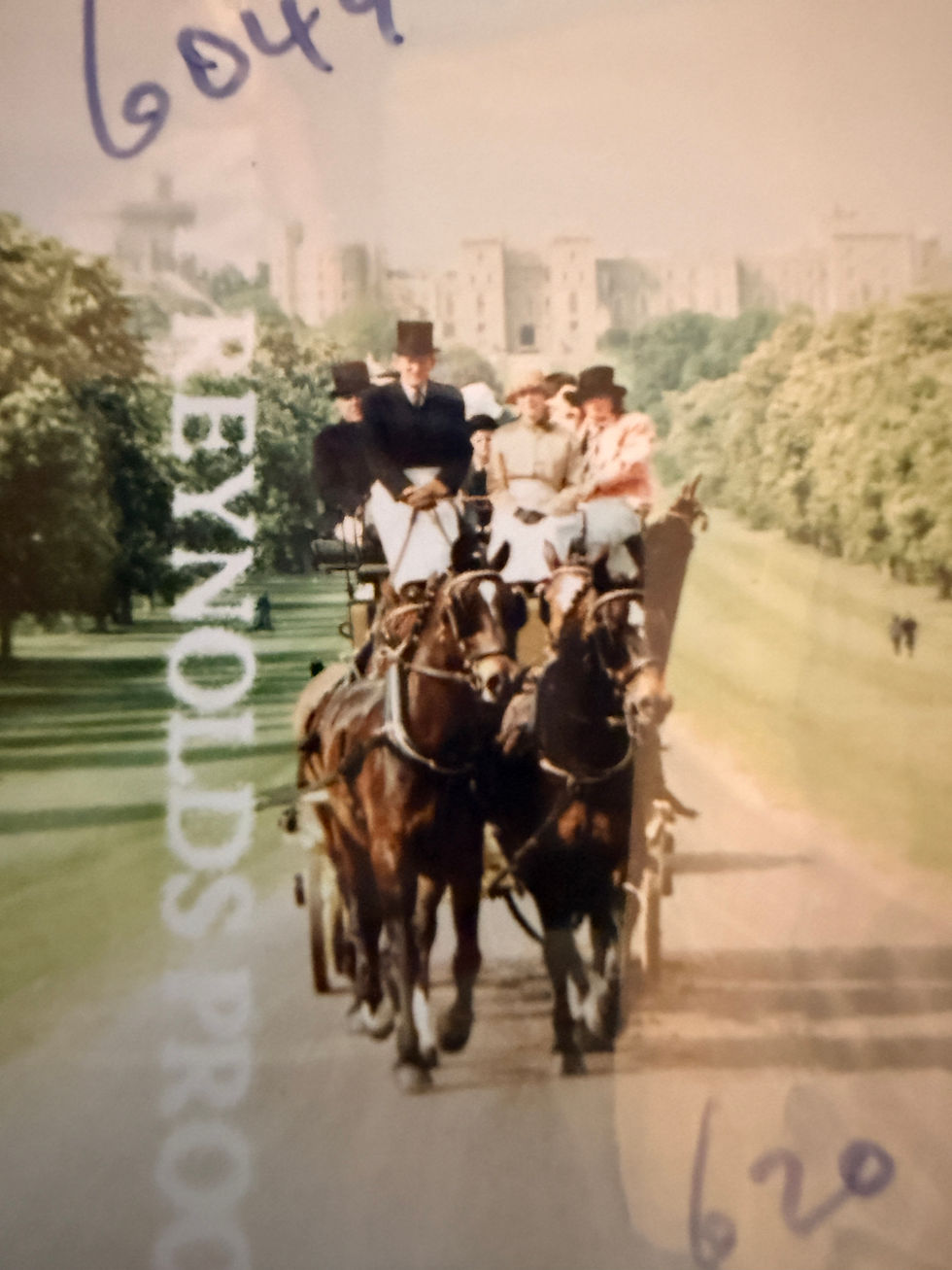
Throughout my childhood, Royal Ascot was always one of the busiest weeks of the year. Whether welcoming private guests arriving by carriage or supporting the wider coaching community, the sight of polished harness, beautifully presented horses and excited racegoers became part of the rhythm of every June.
The tradition extended far beyond Britain. International carriage owners travelled to Windsor with their own horses and coaches to enjoy Royal Windsor Horse Show and Royal Ascot, continuing a remarkable exchange of carriage-driving heritage that connected Windsor with enthusiasts from around the world.
A Tradition That Continues
Today, the Royal Procession remains one of the most recognisable symbols of Royal Ascot.
Although the journey has evolved over two centuries, its purpose remains unchanged: to celebrate craftsmanship, ceremony and the enduring partnership between horse, carriage and Crown.
At Windsor Carriages, we are privileged to continue our own small part in that wider tradition.
Inspired by the same thoughtful approach adopted by the Royal Household, our guests combine modern chauffeur travel with the final stage of their journey by horse-drawn carriage, creating a relaxed and memorable arrival while ensuring the welfare and comfort of our horses always comes first.
More than two hundred years after George IV first established the Royal Procession, the sight of beautifully turned-out horses and carriages arriving at Royal Ascot continues to capture imaginations from around the world.
Some traditions survive because they never change.
The very best traditions endure because each generation understands how to preserve them with care.
If this article has inspired you to experience Royal Ascot from a different perspective, discover how we welcome guests with privately hosted horse-drawn carriage arrivals, combining heritage, hospitality and careful planning.